Genes in Space Selects Winning Student Experiment Bound for the International Space Station
● Serena Tsao and Chloe Comisarow from Bronx High School of Science, NY chosen as the 2026 Genes in Space National winners.
● Research will be the 14th Genes in Space experiment performed by astronauts aboard the International Space Station.
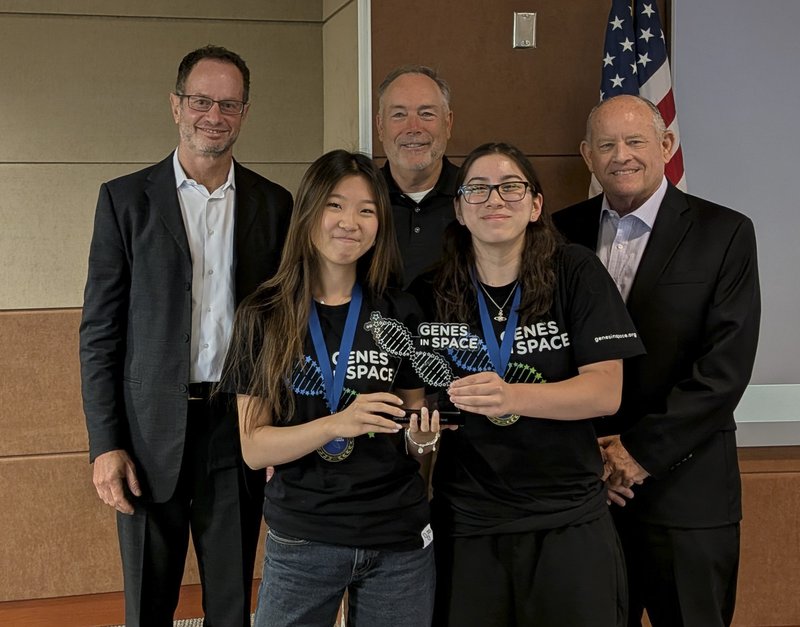
Houston, TX, July 30th, 2026 – Serena Tsao and Chloe Comisarow, two high school juniors from Bronx High School of Science, have been selected as the winners of the Genes in Space competition. The announcement was made today at the Countdown to Discovery event in Houston, TX. The winning team will work alongside scientific mentors and researchers at New England Biolabs and miniPCR bio to finalize their experiment, which will be launched to the International Space Station (ISS) and conducted by an astronaut over the coming year.
Genes in Space invites students in grades 7 through 12 to design experiments addressing the biological opportunities and challenges of space travel. This year’s competition received applications from 369 schools across 40 states and U.S. territories, setting a new record. Five Finalist teams were invited to present their proposals to a panel of judges composed of scientists and educators at the 2026 Countdown to Discovery.
Sebastian Kraves, co-founder of the Genes in Space contest, said, “We gave students intellectual freedom to tackle science's hardest questions. In return, they gave us clues to the world's toughest challenges. Every single year, they astonish us. They never let us down.”
“Students who enter this competition always show remarkable imagination and creativity in their proposals aimed at advancing the understanding of biological challenges associated with human spaceflight and exploration”, said Boeing’s Scott Copeland, a co-founder of Genes in Space.
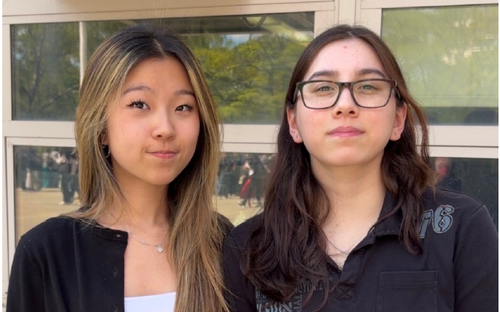
Serena and Chloe's experiment was selected from a record-breaking 980 applications submitted by 1,317 students. Their experiment proposes examining stress-induced kidney stone risk due to microbiome dysregulation in astronauts.
When they learned they had been selected, Serena and Chloe said, "We feel out of this world that our brainchild is going to be sent to the International Space Station."
The other finalist proposals, which also sought to advance the field of space biology, included:
● Ashwin Kirubakaran (15) from Edison Academy Magnet School in Edison, New Jersey, whose project sought to understand the effects of microgravity on targeted cellular protein localization.
● Nikhil Fernandes (17) from Lambert High School in Duluth, GA, and Soneesh Kothagundla (18) from South Forsyth High School in Cumming, GA, whose proposal studied the encapsulation efficiency and structural stability of lipid nanoparticles in microgravity.
● Brandon Choi (16) from Gwinnett School of Mathematics, Science and Technology in Gwinnett, GA, whose project focused on plasmid retention and biomanufacturing potential of E.coli in response to space-induced stress.
● Justin Zhao (19) and Jason Zhao (17) from Jericho High School in Jericho, NY, whose proposal focused on genomic instability due to space-induced R-loop accumulation.
This will be the 14th Genes in Space student experiment performed by astronauts aboard the ISS, in addition to two technology demonstration missions conducted for the program. Founded in 2015 as a collaboration between Boeing and miniPCR bio, Genes in Space has since grown to include ISS National Laboratories and New England Biolabs as program partners. Previous contest winners have explored space biology questions ranging from DNA repair to infection treatment and have achieved significant milestones, including the first gene-editing experiment and the production of synthetic bacteriophage enzymes in space.
Learn more at www.genesinspace.org.
Media contacts:
miniPCR bio: Kristin Hennessy-McDonald, genesinspace@minipcr.com, +1 (781) 990-8727
Boeing: Rosa Bañuelos, rosa.i.banuelos@boeing.com, +1 (321) 313-3134