Igniting Discovery: Genes in Space Alumni in Action
The Genes in Space contest empowers students to design pioneering experiments that tackle the most pressing questions in space biology. This initiative has fueled historic milestones in space, including the first PCR, the first CRISPR-based gene editing, and the first use of cell-free technology in orbit. These breakthroughs have fundamentally expanded our grasp of how biological systems adapt to the rigors of space.
The journey doesn't end at the finals. Our finalists remain vital stars in the Genes in Space constellation, continuing to spark curiosity in their local communities. By mentoring peers and collaborating with educators, they pave the way for the next generation of space scientists.
Finalists in Action
Vedant Karalkar: Expanding Access in Florida
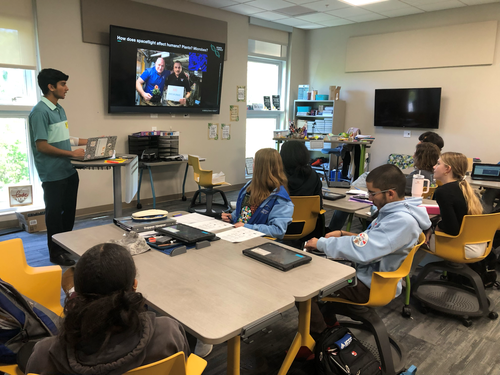
Vedant Karalkar, a 2022 Genes in Space finalist, has dedicated this season to making space research feel accessible and achievable for Florida students. Through presentations at local schools and strategic meetings with district STEM leaders, he works to dismantle the barriers to awareness that often prevent students from seeing themselves in science. Vedant further supports aspiring researchers by hosting weekly mentorship sessions at public libraries, where he helps peers brainstorm and refine their own competition proposals. By showcasing the program at community events such as the Alachua County Science Fair, he continues to inspire a new generation of students to let their curiosity run wild.
Anna-Sophia Boguraev & Aarthi Vijayakumar: Empowering Educators
In a recent virtual workshop, alumni Anna-Sophia Boguraev and Aarthi Vijayakumar collaborated to provide educators with practical strategies for integrating space-based research into the classroom. Alongside experienced GiS educators, they shared personal stories of how the contest shaped their scientific journeys. By equipping teachers with these resources, Anna-Sophia and Aarthi are ensuring that the Genes in Space family continues to expand through inspired mentors and their future student scientists.
Nitya Johar: Designing Science for Space
Nitya Johar, the 2025 National Winner, recently took the virtual stage for the Center for Excellence in Education’s STEM Lyceums to present "Designing Science for Space: Research, Innovation, and Student Discovery." During the session, Nitya shared insights into her pioneering experiment on codon usage bias and translation efficiency, which is scheduled to launch to the International Space Station this August. Her presentation demonstrated how curiosity-driven research can tackle the unique biological challenges of extreme environments, encouraging students nationwide to explore how orbital innovation can advance medical research back on Earth.
The legacy of Genes in Space is written by the students who continue to push the boundaries of what is possible. If you are an alum looking to inspire the next wave of student innovators, we would love to have you involved. Whether it’s through inspiring potential applicants, visiting local classrooms, or sharing your journey at events, your voice is our most powerful tool for expansion. Reach out to us at genesinspace@minipcr.org to explore how you can help shape the future of space biology.