Genes in Space Makes ISS History
For 10 years, Genes in Space has challenged students to design experiments to explore how molecular biology can help solve the biggest challenges of space exploration. Over 10 years, 12 experiments have been sent to the International Space Station (ISS) to be performed by astronauts and to expand the boundaries of space science.
In November 2025, reflecting on breakthroughs and research accomplishments over 25 years of human presence on the ISS, NASA included the 2018 Genes in Space experiment among the 24 Beyond Breakthroughs.
The 2018 Genes in Space winning experiment used CRISPR-induced DNA lesions to model DNA damage caused by cosmic radiation, and was the first use of CRISPR/Cas9 technology aboard the ISS. The experiment was proposed by a group of four high school students from Minnesota: David Li, Michelle Sung, Aarthi Vijayakumar, and Rebecca Li.
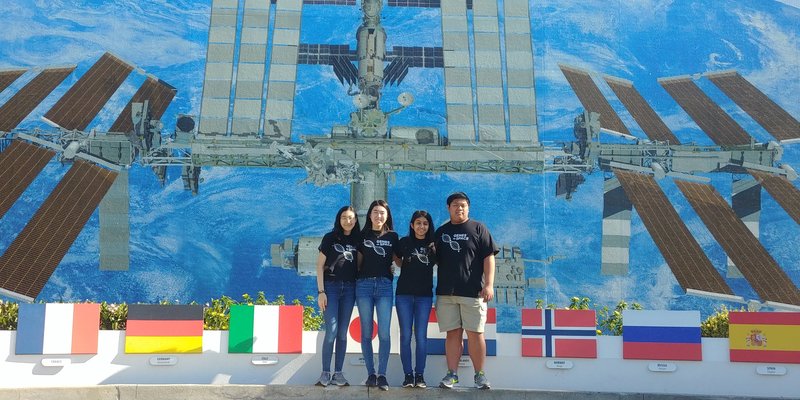
When asked about their experiment being included as one of the 24 Beyond Breakthroughs, Genes in Space winner Arthi Vijayakumar said, “To know that our Genes in Space project is considered to be such a meaningful contribution to scientific progress on the ISS is a huge honor. This program gave us an incredible opportunity to feel like real scientists at such a young age, and that feeling has encouraged me to pursue science and research in the many years since. Thank you to the entire Genes in Space team and its partners that make opportunities like this possible for kids who love science!”
Since winning the Genes in Space Contest in 2018, all four team members have transitioned from high school innovators to researchers and scholars at some of the world's leading institutions.
- Aarthi Vijayakumar is currently pursuing an MD in the Harvard-MIT Health and Technology Program.
- Michelle Sung received a degree in Public Health from Johns Hopkins and now serves as a senior consultant at Oliver Wyman.
- Rebecca Li moved to Yale University to research new approaches to vaccine candidates.
- David Li is pursuing his PhD in Bioengineering at Stanford.
Today, they are collectively making their mark in fields ranging from molecular biology to computational medicine, proving that the curiosity sparked by a space-bound experiment can fuel a lifelong journey in STEM.